













A Conversation With
Indie Club Icon Cindy Barber
We are expanding our Indie Artist Insider series to include guest blogs from industry professionals and artists from our SongCast family of indie artists.
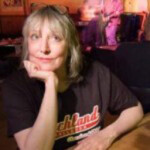
Cindy Barber began working in the music industry right out of high school, getting her foot in the door at various record labels including MCA and Warner/Elektra/Atlantic. She earned degrees in Media and Communications, managed local bands, worked as an author for various publications, and helped launch the Cleveland Free Times, as an assistant publisher and editor. The paper won various awards and Cindy won awards for her writing.
In March of 2000, she co-founded the Beachland Ballroom and The Beachland Tavern, side-by-side Cleveland, Ohio venues that have become both acclaimed and legendary in the world of indie artists and national and international touring acts. The Black Keys played their very first gig at the Beachland and the club has gained a reputation as being one of the most admired indie venues in the United States.
In addition to running the Beachland, Cindy became heavily involved in revitalizing the North Collinwood neighborhood of Cleveland, serving as president of Arts Collinwood and winning a Northern Ohio Live Achievement Award in Economic Development.
Cindy has served on the City of Cleveland’s Fair Housing Board, the Northeast Ohio Coalition for the Homeless, and the former Cleveland Music Group. In 2007, she was honored with a Cleveland Arts Prize, for Distinguished Service to the Arts.
We had the pleasure of talking with Cindy about her 25 years at the Beachland Ballroom and she shared a treasure trove of thoughts, experience, and anecdotes about working with indie bands.
Question 1: What made you decide to become a club owner and get into that aspect of the business?
Answer: Well, the journalism industry was collapsing and my newspaper, The Free Times, got bought out by the Village Voice and they were consolidating. It was painful. Then I just wanted to work on my neighborhood, cause I live in this neighborhood where the Beachland is. I saw it as lots of empty buildings, because people were abandoning the city and running to the suburbs and I wanted to try to figure out a destination location that might bring people into this neighborhood. So starting a music venue, I thought would be good.
Question 2: What notable bands played at your club early on?
Answer: The White Stripes played, I think the second or third week we were open. And obviously, you know, to 20 or 30 people. Obviously they went on to big things. The Greenhornes played actually the first Saturday we were open. They’re a garage rock band from Cincinnati. A lot of those players became Jack White’s backup band for the Raconteurs tours.
The Black Keys played their very first show at the Beachland in 2002. That’s sort of a legendary story that they lied and said that they’d been playing all over the place and got a record deal out of Alive Records. They actually had never played out at a club at all and recorded that record in Pat Carney’s basement.
So they were scrambling and asked to play at The Beachland. I think they played in the tavern like three or four times and then we ended up moving them to the ballroom. Then we moved them to the Agora. The next thing you know, they’re playing arenas.
Related Question: Anyone Else?
Answer: Drive-By Truckers when they were doing their Southern Rock Opera Tour. They got into a fight on the stage. I think there was like 20 people in the room that day. Joe Bonamassa still had his uncle, I think, taking care of him. I think he probably was even underage when he started playing here. There’s a lot of people, a lot of people.
Question 3: Let’s say a new indie band has grown a bit of a following, even if they’re not from the Cleveland area, but they’re looking to book a small Midwestern tour in some neighboring cities and states that they haven’t played before. What advice would you give them?
Answer: You have to have an EPK. You have to have all your ducks in a row, that material, a website, you have to have music that’s distributed. And you still have to have some kind of financial support to get out there on the road and tour. When we were helping the Black Keys, there were just two of them. That was a little bit easier to jump in a van and drive all over the Midwest, which is what they did. I certainly had friends of mine hit the road and not have a credit card! And then they’re broken down someplace and they’re calling me to help them. And a AAA membership wouldn’t hurt, either.
Question 4: Now, if a band is, let’s say a band from Detroit or somewhere outside of the Cleveland area is contacting you for the first time. They’re starting to book their first tour. What are some things they can do to get noticed by you and have you secure a date with them?
Answer: Mark is still the main booking person at the Beachland and he’s always gonna look at how many fans you have on Facebook, how many Spotify listens you have, things like that. We’re gonna try to look at what your reach is for followers. So that’s always the first judgement. If they have friends, one of the things that a lot of people are doing is to find a contemporary in a city. If they’re not from Cleveland, is there somebody that would help kind of speak for them that we might know? If it’s a local band and we wanna give them a try, if they’ve been able to get their friends out to a show. As far as having a contemporary in the city, maybe they use that contemporary and open for their band.
Question 5: What percentage of bands would you say that you book or that approach you that doesn’t have a booking agent or doesn’t have a record label and are trying to do it all on their own?
Answer: Very few. Only local. I mean, we’re always dealing with booking agents. And sometimes they’re baby bands and the booking agent has just signed them and they’re trying to get them out.
Related Question: So a booking agent is pretty much a necessity if you’re gonna start to play shows outside of your home area?
Answer: Yeah. Plus, I think you have to have music already out there and have a good record that has gotten reviewed at least a few places or gotten played somewhere, so that you at least have a chance of getting some people out to a show.
Question 6: The way that the landscape has changed with radio and stuff, what are you referring to when you’re talking about you’d like to see bands getting played? Are you still referring to college radio? Are you talking about Spotify playlists? What are you referring to?
Answer: Well, I think that that’s the big question! Are people finding music on Spotify? Sirius plays some people. People are discovering music out there and sometimes it’s still a mystery to us how they got discovered. We just had Orla Gartland, an Irish girl, play the other day and there were around 300 hardcore fans, but she’s not getting played on college radio. She’s not getting played on regular radio. I’m really not sure how people found out who she was, but she’s a niche artist that is very LGBT focused and people found her and she put on an amazing show.
Question 7: Do you think people are reaching potential new audiences through stuff like Facebook reels or through YouTube, TikTok, and stuff like that?
Answer: I do. I do think people are finding people through YouTube. One of the things that we’ve been surprised at is taking the live streams that we do, for live shows, and turning them into two minute reels and putting them up on YouTube. And all of a sudden we’ve gone up to like 30,000, 50,000 views for our nonprofit YouTube page. So people are definitely finding things on YouTube and we’re learning, we ourselves are just learning how to tag and how to say here’s something similar to this artist that you might like. And so you’re taking them down a rabbit hole and bringing them to music, to that particular music. And the thing that’s been successful on using YouTube, is it more like the YouTube reels, like the shorter reels, Because those kind of scroll by people’s feed a lot easier than just finding a static video.
Question 8: As far as electronic press kits go, what are some things about an electronic press kit that will grab your attention or on the flip side, what kind of things in an electronic press kit will just make you pass them by very quickly?
Answer: Well, one of the things that we were just talking about is putting some kind of quote in there. If you’ve gotten a review of your music or just asking a venue where you played and had a good reaction for some kind of quote and endorsement, some sort of reflection from somebody else besides yourself about what kind of music you’re playing and why it’s important, or why somebody likes it. If you don’t have a stable platform, then I don’t really want to talk to you. Some people are like only using Bandcamp and they don’t have their own site. If you hit the wrong button, you’re out of there! Because it’s just one part of a bigger platform. It’s not your own space.
Question 9: Do you find those free websites like Wix and stuff to be a turnoff?
Answer: Yeah. It needs to have your own URL. And you need to have your own.
Question 10: If a band is going to send you some of their music, what’s the best way for them to send it to you?
Answer: Well, an MP3 or you can send us a link to a YouTube. For a club, we kind of want to see, and this is another thing that we were just talking about on Monday at our incubator meeting was, venues are going to want to see like two songs of you playing live, that sound good and gives the representation of what you look like and what you do on stage. So that’s more important than a really well-produced audio track from a studio. From a venue perspective, they want to see what you’re going to be like on stage.
Related Question: Is it also really important to have a really good polished studio track and audio track as well, or is the video way more important just from a venue standpoint?
Answer: The video is more important from a venue standpoint. It’s also going to be important to know that they have some energy behind them. If you’re a national touring band, we want to know that you’ve got a label and a label that has hired a publicist and that you’ve got a plan. That’s usually what happens with these tours. They’ve got 12 dates and here’s the clubs that they’re going to play and that gets released all at one time. And then there’s a press release that goes out to the national press that usually also ties into new music that’s just been released. And hopefully by that time, they’ve already got a review of the record.
Question 11: Let’s say that there’s a band from Grand Rapids, and they’ve sent you their stuff and they’ve got a decent amount of fans and they’re kind of on the upswing and they’re looking to branch out and come to Cleveland and play. What kind of promotions would you expect them to do to promote their show?
Answer: We’re always checking to see if the bands have created a Facebook ad or an Instagram ad or a TikTok ad and that they’ve got some kind of video that they’re putting out that says, hey, I hope to see you on Monday night at the Beachland when we hit the stage! Here’s our new music, we’d love to see you, come on out. You can focus it on like 200 miles around the Cleveland market.
Question 12: Is there anything else besides social media promotion that you would hope a band would do to try and prep for a new market like Cleveland?
Answer: Who do you call to get press anymore? There’s really not much else they can do, other than try to find somebody in Cleveland to help get the word out. If they can find a friend of a friend. Try to find somebody and get them to come out. Joseph Arthur just played, he’s a pretty well-known artist, but he hasn’t played out in a long time. And he’s from Akron. I think he lives in New York or Paris now, but his parents were there the other night. His parents came up to see him. It’s always good to try to get whoever you might know, even people you know, second or third hand to get to come to the club.
Question 13: What kind of promotion do you do at the club for your upcoming shows?
Answer: We spend a huge amount of money on social media every month. We make an ad mat for each and every show, so that ad mat gets printed on a card that gets distributed in-house at the Beachland and taken to other places. And it’s on our website. We do a newsletter once a week that reaches 75,000 people.
Question 14: What percentage of bands that you book have their own contracts? Is that something that you like when a band approaches you with a contract so everything is kind of laid out?
Answer: Well, everyone that comes in nationally has a contract and that’s, for the Beachland. I mean, we do local shows, but, probably 85 percent of what we do is national shows with contracts from a booking agent.
Question 15: Any do’s and don’ts for bands when they arrive the day of the show at your club?
Answer: Often times you’re there at one o’clock in the afternoon to greet the tour manager as they’re getting off the bus. If you’re grumpy and you’re demanding immediately, my staff gets a little prickly. Just be nice. Yeah, that does go a long way. A little courtesy goes a long way.
Question 16: Will you help a band when they’re coming to town, help them find accommodations and stuff like that when they come or are they kind of on their own when it comes to that kind of stuff?
Answer: Well, they’re mostly on their own, but we just bought a house behind the Beachland. So we now have a band house, which we only charge like a hundred bucks for this house and it sleeps like six people. So we offer that as an option for people.
Question 17: Without mentioning any names, of course, tell me about one of the worst experiences you’ve had with a band that you’ve booked at your club. The reason I’m asking this is I am hoping some newbies will see this and they’ll realize some things that they shouldn’t do.
Answer: Well, the green room is in the basement at the Beachland and the walk-in cooler where all the beer is, is right there adjacent to the green room. So one of the worst things has been that people just walk in and help themselves to whatever they want. Hopefully that’s deducted out of their pay. You can’t keep track of it and it’s just, you know.
Question 18: How many shows a month would you say on the average you do at the Beachland?
Answer: Oh, God. I don’t know, like 50. A month? And that’s the Tavern and the Ballroom. We’re doing like at least 10 or 12 shows a week. So it’s probably about 50.
Thank you very much Cindy for your time and sharing your experiences with SongCast. It was a pleasure talking to you and we commend you for the work you have done, not only in helping indie bands get started and further their careers, but the incredible work you have done revitalizing the Collinwood neighborhood of Cleveland. Cleveland is a much better place, because you are here.
Comments
No comment